What to say when you first contact a clinician
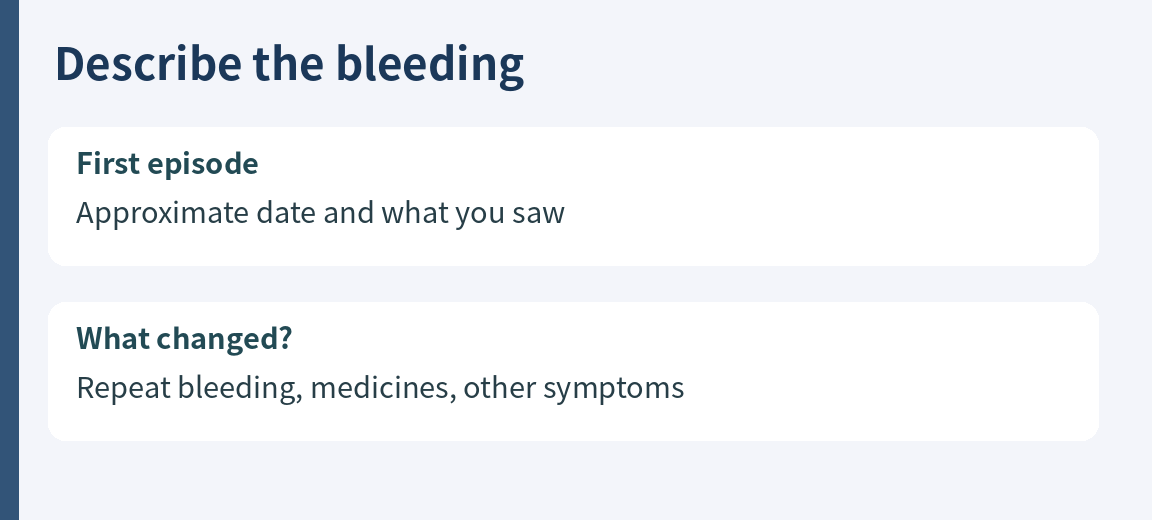
“I have had vaginal bleeding after menopause” gives the person arranging your visit more useful information than “I’d like a checkup.” Describe when you last had a natural period if you know. Explain when you first noticed the bleeding, whether it occurred more than once and whether it is still happening. You can report a change without knowing why it happened. If you are unsure whether the blood came from the vagina, urine or bowel, say so rather than choosing the source that seems most likely.
You do not need to collect a week of observations, find old records or wait for a second episode before making contact. If you write something down, keep it simple. Approximate dates and a plain description are enough to start. A note such as “a small pink mark when wiping on Monday, none since” is useful because it records what you actually saw. A guessed diagnosis can distract from the reason the clinician needs to assess the symptom.
Tell the clinician if you take hormone replacement therapy, blood-thinning medication or any medicine that recently changed. Bring the medication names, doses as prescribed and the dates of changes if you have them. If your medicines were prescribed in a different country, take a copy of the label or prescription so that the clinician can identify the actual product. Ask your prescribing clinician before altering medicines. Even when there is a possible medication-related explanation for bleeding, let the clinician decide which assessment you need.
Why an ordinary screening package may miss the question
A screening appointment generally looks for signs of disease in people without the symptom being investigated. You are asking about something that has already happened. A clinician needs to decide what the bleeding might mean in light of your history and examination. When contacting a booking desk, repeat that the visit is for assessment of bleeding after menopause. If you are offered a general package, ask who would evaluate that symptom and what happens if the available appointment does not include the appropriate assessment.
Bring any cervical screening results if you have them, but do not use a recent normal result as the reason to dismiss new bleeding. Ask what the previous test examined and whether it answers the same question as the proposed evaluation. It may help the clinician understand your history without replacing an assessment of the present symptom. Similarly, a normal examination from several years ago does not establish the cause of a new episode.
If a friend recommends a particular test, you can ask about it without committing to it. The useful question is what each test would add for you. A scan, an examination and a tissue sample answer different questions. The sequence depends on the history, findings and the clinician’s assessment. Booking a collection of tests because a travel package includes them can leave you without someone responsible for interpreting the combined findings.
Understand what an examination can involve
The first discussion may cover the timing of your last periods, hormone use, prior gynecologic procedures, recent symptoms and previous findings. A clinician may suggest examining the vulva, vagina and cervix. An examination with a speculum allows a view inside the vagina. If you have experienced pain with examinations, have concerns about positioning, or would like a chaperone or interpreter, say so before you undress. Ask how you can signal that you need the clinician to pause. You can ask for an explanation of the proposed examination before deciding whether to proceed.
A vaginal ultrasound uses a probe to produce images. One reason it may be offered is to examine the lining of the uterus. Ask the clinician what the scan can show, what it cannot establish and whether its findings might lead to further assessment. A number on a printout is not a diagnosis. Ask for the clinician’s interpretation, including whether there are circumstances in which they would still advise follow-up after an initially reassuring result. NHS overview of assessment
Some people are advised to have a closer look inside the uterus with a hysteroscope, or a small tissue sample taken for laboratory examination. Ask whether the consultation includes the test itself or only a decision about arranging it. Ask about comfort measures, alternatives and what to expect afterwards. It is reasonable to ask whether a different service will carry it out, how soon you will be contacted and what clinical circumstances should prompt you to seek help sooner. These details matter more to your trip planning than a generic statement that a clinic offers women’s health care.
Who will explain the result?
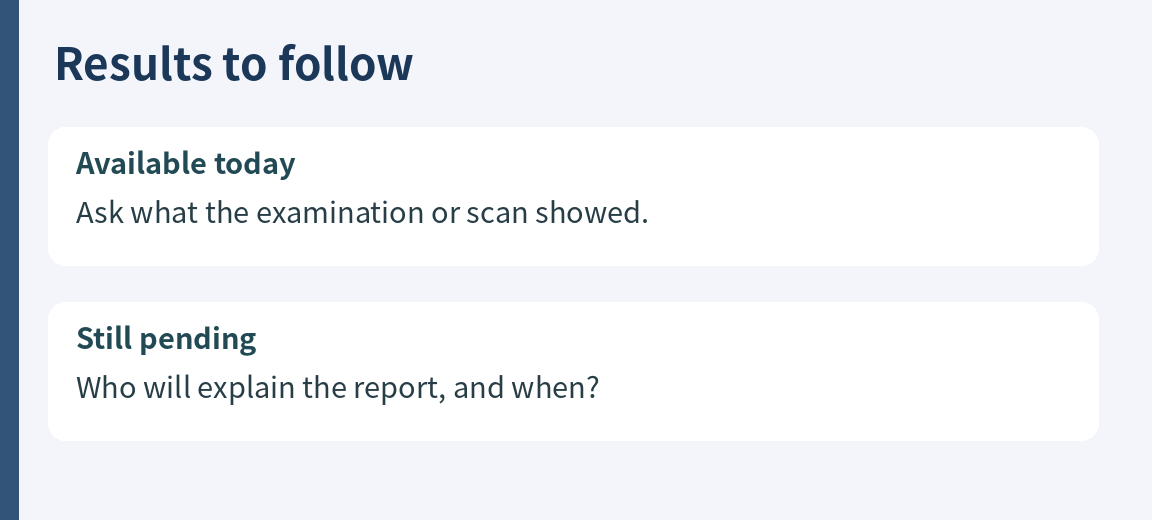
A scan report, a clinician’s initial impression and a laboratory report may become available on different days. At the end of a visit, make a list of the information you have actually received and the information still outstanding. Ask whether the team will contact you regardless of the result, how they will reach you and when you should follow up if a message does not arrive. Give them a contact route that you can use on both sides of your trip.
If a tissue sample is taken, find out where its report will go and who will put the result in context. A booking service may send a document without being able to interpret it. Ask whether you need another appointment with the clinician. If you intend to share the report with someone at home, ask for a copy that identifies the test, the date, the facility and the patient correctly. Check how to request a translation if your receiving clinician needs one.
If symptoms recur after an initial assessment, contact the clinician again and explain that this is a new episode after a previous evaluation. Have the earlier results available if possible, but do not delay contact if you cannot immediately retrieve them. Ask the team what to do if bleeding changes or you feel unwell while waiting for results. If you have severe bleeding or feel faint or acutely unwell, seek urgent local care.
Plan for travel only after discussing the clinical timing
If you are preparing to leave for Korea, tell the clinician who first assesses you the date you plan to leave and when you would be back. Ask whether there are tests or follow-up visits that should happen before you travel. If you need to change your plans, ask whether a concise medical summary can be provided for the clinician who will take over. A booking confirmation abroad is not the same as a confirmed clinical handover.
If you are already in Korea and will soon return home, ask what can realistically be completed during your stay. Having a sample taken on the day before a flight does not guarantee someone will explain the result before departure. You may need a plan that crosses borders. Confirm that the receiving clinician at home can access the information and knows what is still pending. Write down the direct route for following up if the report is late.
When arranging a paid appointment, request a breakdown of what is included. Ask separately about clinician assessment, imaging if needed, laboratory examination if tissue is taken, interpretation, a written report and a follow-up discussion. The discussion of costs should help you understand the plan after the clinician has explained what is medically indicated. Do not postpone urgent care while trying to compare elective travel packages.
A listed clinic for a gynecology inquiry in Seoul
Second Spring Women’s Clinic appears in the Best Doctors Korea directory. Its international site lists a women’s disease and menopause service. If you are in Seoul and need help arranging a gynecology assessment, describe the bleeding specifically and ask whether the clinic can see you within the time recommended by your local clinician, which assessment it can provide and where it refers patients if more investigation is needed. The service listing alone does not confirm that a particular test is available on a particular day. If your current clinician recommends a hospital or an urgent assessment, follow that route.
Best Doctors Korea clinic profile · Second Spring international women’s disease and menopause service.
Questions patients often have
Does spotting that stopped still need an appointment? Yes. Report bleeding after menopause even if it was light or occurred only once. Mention that it has stopped. The amount and pattern are useful history, but they do not let a patient establish the cause at home.
What if I do not know when menopause began? Explain the uncertainty. If hormones, previous surgery or another situation makes your periods hard to interpret, tell the clinician about that history. You do not need to settle the terminology yourself before asking about unexpected bleeding.
What should I leave the appointment with? Ask for a plain-language explanation of what has been established, what remains uncertain and which test or review comes next. Write down the name of the service responsible, a way to reach it, and what should prompt you to seek care earlier. If any part of the answer depends on a result that has not arrived, keep that item open until someone has explained it to you.