Be clear about what you want the visit to achieve
There are several different reasons someone might ask about HPV vaccination. You may have received one or more doses and lost track of the plan. You may be unsure whether you were vaccinated at school. Or you may have received an HPV test result and want to understand whether a vaccine can treat it. Explain which question brings you to the clinic. This allows the team to distinguish a records review, a preventive vaccination discussion and follow-up of a test result.
HPV vaccination helps prevent new infections with types of HPV covered by the vaccine. It does not treat an infection or disease you already have. If you received an abnormal screening result, ask the clinician who arranged the test what follow-up you need. A vaccination appointment is separate from that follow-up. Receiving a dose does not replace recommended cervical screening. If you have both questions, ask for enough consultation time to discuss them separately. CDC overview of HPV vaccination
If you are unsure whether vaccination is relevant at your age, ask for an individualized discussion using the recommendations applicable to your circumstances. Countries differ in the ages served by public programs, the rules for catch-up and who pays. An offer to sell a vaccine does not on its own explain the likely benefit for you. Ask the clinician how your age, prior doses, health history and preferences affect the decision.
Reconstruct your vaccination history
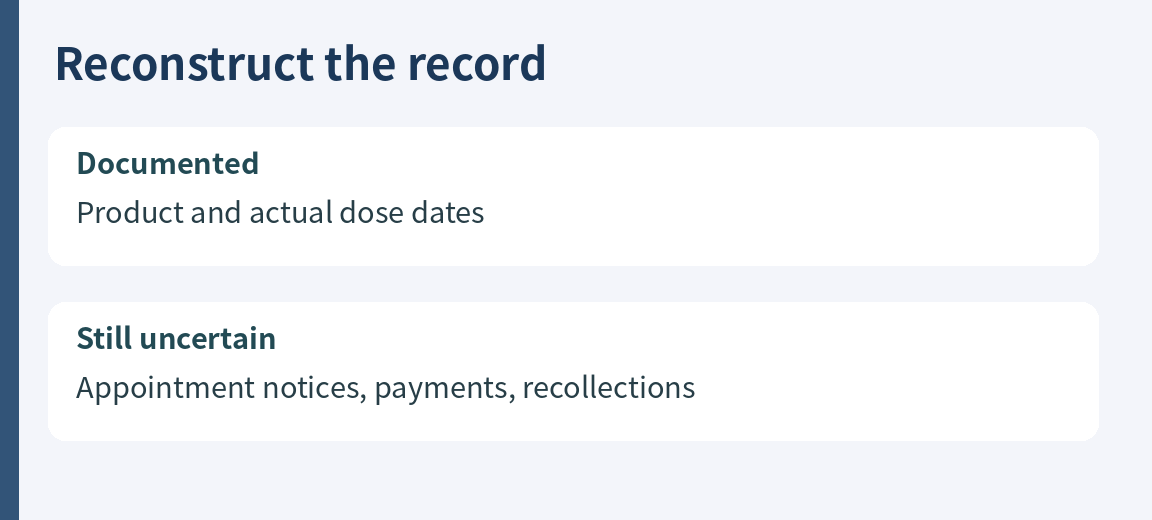
Begin with any personal immunization card, childhood health record or vaccine receipt you already hold. Look for a product name, dose date and the clinic or program that administered it. If you received it through school, the record may be held by a school vaccination program, a local service or your usual clinician. Ask what records exist and how to request them. If your documents use different names because your name has changed, explain that to the team privately.
A receipt can show that money changed hands without showing whether or when a dose was administered. A reminder message can show that an appointment was planned without documenting attendance. Keep those items apart from a vaccination record. If an earlier provider can confirm the actual administration date and product, ask for the confirmation in a format you can save and share securely. Do not enter a scheduled appointment in your dose history as if the vaccination definitely took place.
Write dates in a form that a clinician in another country can read without guessing the order of month and day. Spell out the month or use a full year, month and day label. Be careful when copying a record expressed in a local calendar. Keep the original alongside any conversion and ask for assistance if uncertain. A date that looks exact can still be misleading if the month or year was interpreted incorrectly.
If a record is incomplete, distinguish a confirmed date from your recollection. It is fine to say you remember an injection at school but cannot identify the vaccine. The clinician can tell you how they handle uncertain records. Do not decide for yourself that you should restart, skip or add doses because a card is missing or because one interval was longer than expected. The product, documented doses and applicable recommendations need to be considered together.
What the clinician may need to know
Tell the vaccination provider about previous vaccine reactions, allergies and relevant medical conditions. Mention pregnancy or the possibility of pregnancy and ask whether vaccination should be deferred. If you have been treated for an immune condition or take medicines that affect the immune system, raise that privately. The assessment may affect the recommended schedule and timing. You do not need to disclose sensitive health information in a public message just to ask how to book an appropriate appointment.
Ask why the clinic recommends a particular number of doses in your case. In US CDC guidance, age at the first dose and immune status can affect the series. That is a useful illustration of why dates and medical history matter. It does not establish a Korean, Japanese, Taiwanese or Indonesian national schedule for every international visitor. Ask which guidance the clinician is using and how the plan will fit with care in the country where you usually live. CDC recommendations
If the product available in Korea differs from the product on your record, ask the clinician to explain the implications. Do not infer equivalence from similar packaging or a shared manufacturer. Request the name of the proposed product in writing. If you are comparing advice from two countries, share the same documents with both clinicians and ask them to explain any difference in recommendation. An apparent disagreement may reflect different assumptions about dates, age, local program rules or which record was available.
Confirm the arrangements before paying
A clinic may offer adult vaccination as a service without having every product available on every date. Ask which product the clinic is able to provide and whether an assessment is required before the decision to vaccinate. Ask what happens if the clinician concludes that another dose is unnecessary or should be postponed. Request a breakdown of any consultation, vaccine and documentation fees. Ask whether the quote is for one appointment or for a series of appointments.
If you hope to use a public program or obtain reimbursement at home, contact the relevant program before paying. Tell it specifically that you are considering a dose in Korea and ask what documentation it accepts. A product being licensed or available in two places does not by itself settle funding, reimbursement or electronic-record entry. Keep the answer from the program together with the clinic’s quotation so that the clinical and payment questions stay distinct.
The timing of a Korean appointment also needs to fit any later appointments you will require. If another dose may be due after you leave, identify a provider who can review the Korean documentation and advise on next steps. An invitation to “come back later” is not a fully practical plan for someone living overseas. Ask for an approximate follow-up window after the clinician has reviewed your dates, and ask who will make the final determination if your travel plans change.
What to request when a dose is given
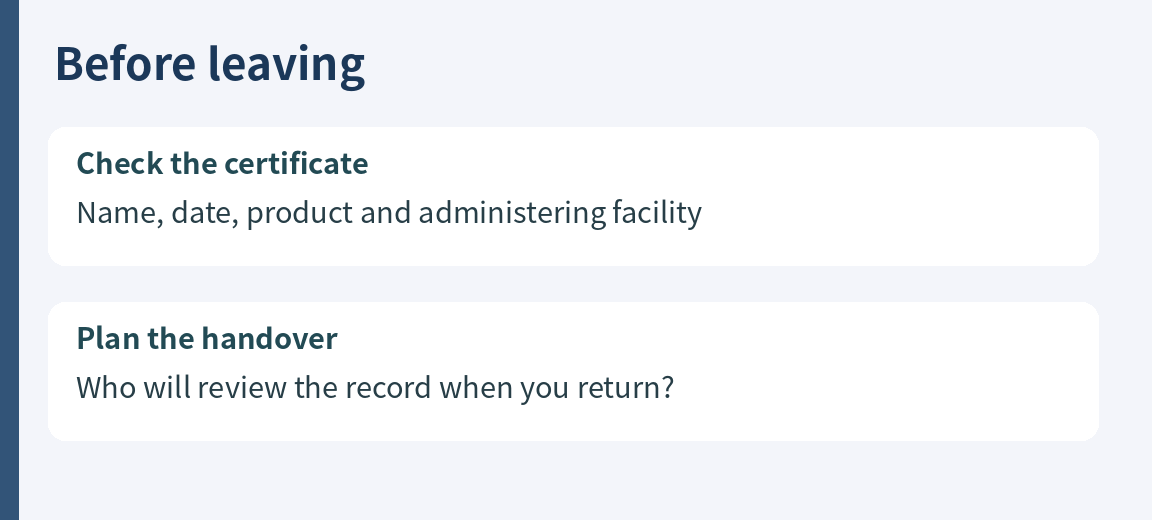
Before you leave the clinic, check your name, date of birth or other identifier used in your health records, the vaccination date, the product name and the name of the administering facility. Ask for the lot number if documented and for contact details the receiving clinician can use to clarify the record. Ask whether a copy can be provided in a language your next provider can read. Keep the document in a secure place with your earlier vaccination records.
Request a written statement about whether the team considers the series complete, incomplete or uncertain, and the basis for that conclusion. A record that documents a dose is useful even if the next decision will be made elsewhere. Do not change previously recorded dates to make the paperwork look consistent. If you find a discrepancy, ask the provider who issued the document to correct or clarify it. Keep a note of which version was corrected so that your receiving clinician does not count the same dose twice.
Ask what short-term effects to expect, what symptoms would need prompt attention and what to do if concerns arise while abroad. Use the advice given by the vaccinating team and local urgent services when appropriate. A clinic’s administrative inbox may not be staffed for urgent symptoms. If you are unable to communicate comfortably during the appointment, ask for interpretation before giving consent and request a clear explanation of aftercare instructions before leaving.
A clinic to contact about HPV vaccination in Seoul
Best Doctors Korea lists Second Spring Women’s Clinic in Gangnam. Its international website identifies HPV vaccination as a service. If you are arranging a visit, ask whether the team can review a record from your home country, which product is currently available, what documentation it issues and whether a separate appointment is needed for any screening concern. The clinic is included here for that service match. A listing does not establish your eligibility for a public program or whether another dose is indicated.
Second Spring clinic profile · Second Spring international website.
Questions to resolve when you return home
Will my overseas dose automatically appear in my national record? Ask the service responsible for your record. An overseas receipt or vaccination certificate may need to be reviewed or entered locally. Send documents only through its designated channel. Keep your own copy even if you can see an electronic entry.
What if a date on a reminder differs from my Korean certificate? Tell the receiving clinic which document records an actual administration and which was a reminder. Ask it to reconcile the dates before scheduling a further dose. If the records remain unclear, leave the question open for clinical review rather than trying to settle it by counting messages or payment transactions.
What is the simplest successful outcome? You should know whether vaccination is appropriate now, what record supports that decision, what documentation you will receive if a dose is given and who will decide whether anything else is due. Sometimes the most useful result of the appointment is a clear explanation that you already have what you need.